Making Goat Milk Soap for Beginners
One of the most rewarding ways to use excess goat milk is by making goat milk soap. Goat milk soap has become popular because it is gentle on the skin and contains natural fats that help create a creamy, moisturizing bar.
Before getting started, it’s important to understand that soap making involves working with lye. Always wear gloves and safety glasses and follow a trusted recipe carefully. Making soap has a few details that need to be followed exactly:
- Making soap is a a chemical reaction so once mixed the ingredients make a new product
- Measure the amounts listed in your recipe exactly. This is very important so the chemical reaction that takes place neutralizes all the lye, so the soap is safe to use.
- Using frozen goat milk cools the reaction with the lye which not only prevents the milk from scorching there should be no toxic fumes produced
- Don’t be afraid of the lye, but respect it – wear gloves and googles when mixing
- Any soap making containers, spoons, spatulas, emulsion blenders that the lye is in should not be used for food preparation.
- Lastly, if a batch goes bad don’t pour down the drain, don’t just throw in the trash. Don’t try to reuse it because it can’t be reused. It is toxic and needs to be disposed of as hazardous waste. But the good news is as long as you follow a trusted recipe to the letter, you won’t have any issues. I have made over 20 batches of soap and have never had a batch fail.
Benefits of Goat Milk Soap:
- Gentle for sensitive skin
- Rich, creamy lather
- Naturally moisturizing
- Contains vitamins and minerals found in goat milk
Basic Supplies:
- Frozen goat milk
- Lye
- Olive oil
- Coconut oil
- Tallow or Lard
- Safety equipment
- Soap mold
- Digital scale
- Digital thermometer
- Emulsion blender
The key to successful goat milk soap is having the goat milk frozen then mixed with the lye. Many soap makers freeze their goat milk in ice cube trays before beginning. This helps prevent scorching and keeps the finished soap light in color.
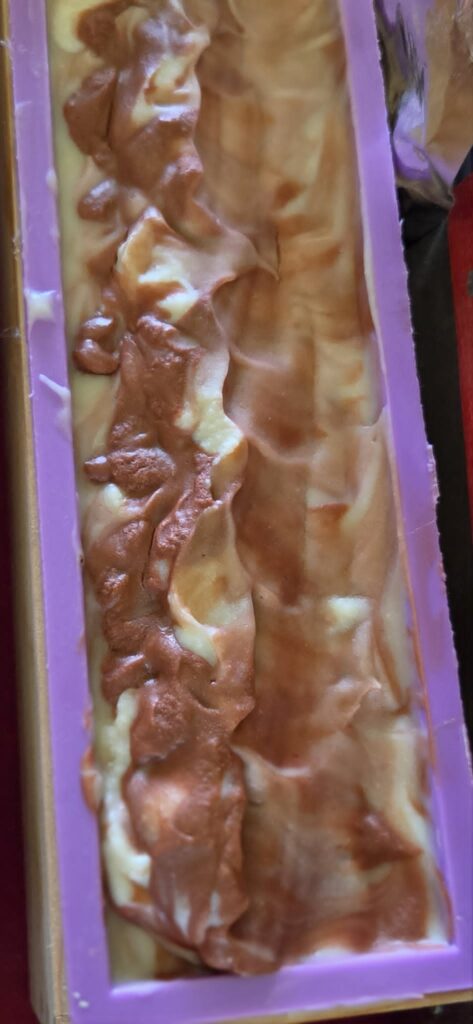
Heat the coconut oil and Lard to 170 degrees, then pour the oils into the lye milk mixture and add the room temperature olive oil. The resulting mixture should be around 110 degrees. Use the emulsion blender and blend to trace. This is where you can add fragrance and colorant and use the emulsion blender to finish mixing. Then pour into the molds and decorate the tops by using a spoon to pile the soap on top.
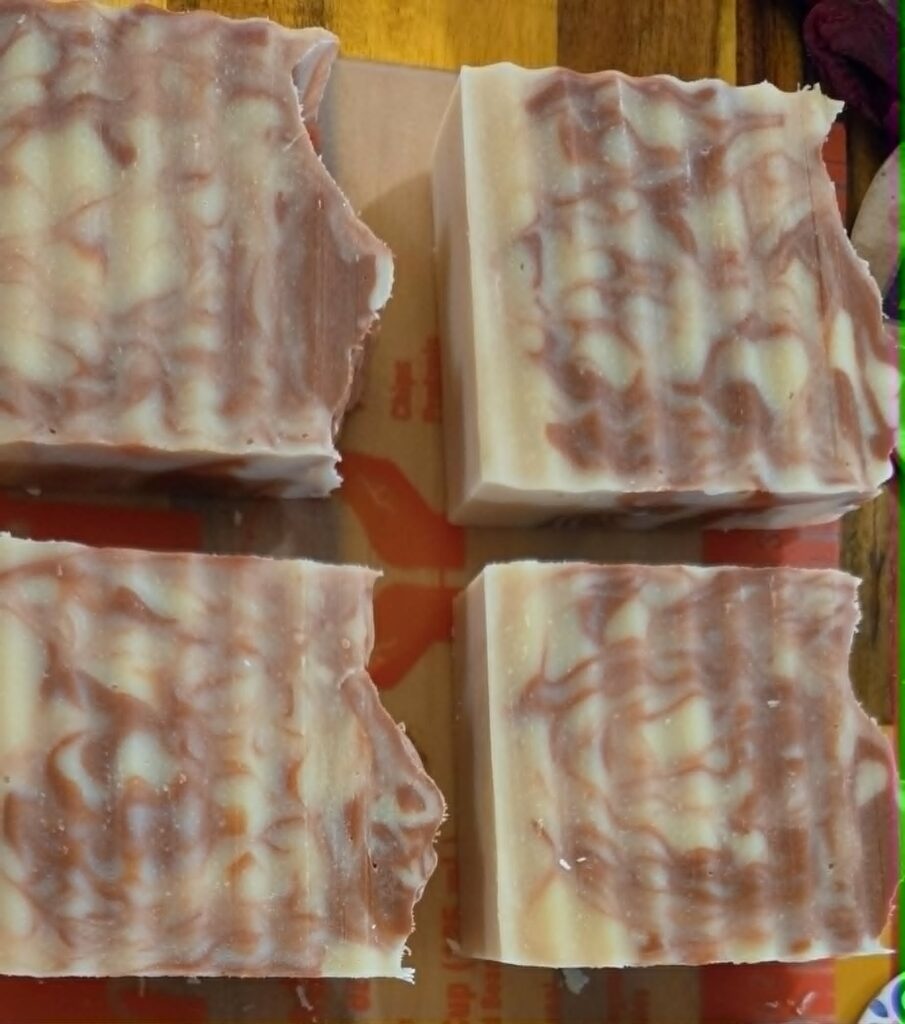
Once the soap is poured into molds, it should cure for four to six weeks before use and have pH strips available to test the soap. It shold be a deep green color and it’s safe to use. If it isn’t dark green don’t use the soap it can burn the skin. Although the waiting period can feel long, the result is a beautiful, handcrafted product that your family and friends will love.
Making goat milk soap is a wonderful way to add value to your homestead and make use of the milk your goats provide.